
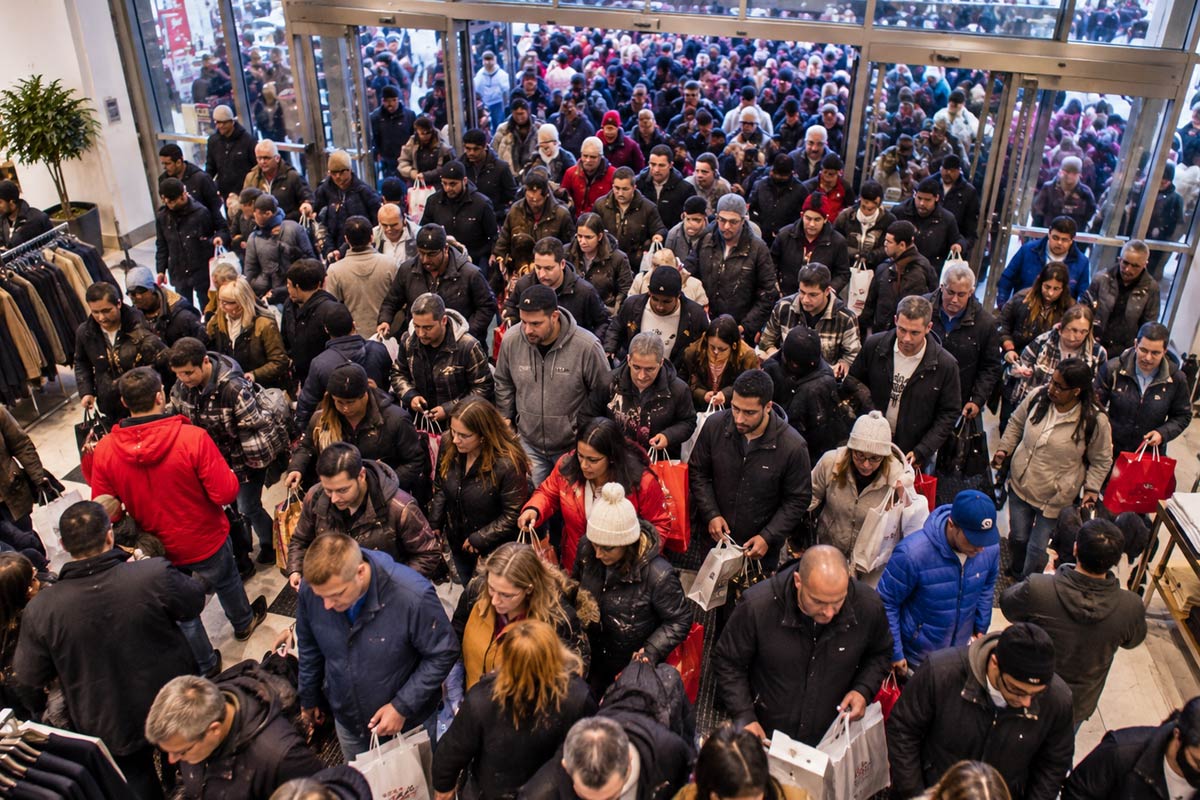
Black Friday brings some of the busiest shopping days of the year to Albany and the surrounding Capital Region. Retail stores fill with customers searching for holiday deals, checkout lines grow longer, and shopping centers experience increased activity from early morning through the evening.
For many people, the day is an opportunity to get holiday shopping done at discounted prices. However, crowded aisles, merchandise left on floors, improperly stacked displays, and slippery entrances can also create conditions that lead to serious injuries.
A shopper who slips on a wet floor, trips over merchandise, or is struck by a falling display may face unexpected medical expenses, time away from work, and a difficult recovery.
As Black Friday approaches, shoppers visiting Crossgates, Colonie Center, and other retail destinations in the Albany area should be aware of the risks associated with crowded stores and shopping environments.
When an accident occurs, an important legal question is whether the store, property owner, or another responsible party failed to maintain reasonably safe premises.
Black Friday Shopping Brings Increased Activity to Albany Stores
The Albany Capital Region has several major retail destinations that attract shoppers during the holiday season.
Crossgates in Guilderland is one of the area’s largest shopping and entertainment destinations. For Black Friday 2026, the shopping center has announced that it will reopen on November 27 at 7 a.m. and close at 9 p.m., following its Thanksgiving Day closure.
With more than 180 retailers, restaurants, and entertainment venues, the center offers a wide range of shopping opportunities under one roof.
Colonie Center and other retail locations throughout the Capital Region also attract holiday shoppers.
More customers mean more activity in store entrances, aisles, checkout areas, escalators, elevators, and parking facilities. Retail employees may be restocking shelves, moving merchandise, cleaning floors, and assisting customers while dealing with increased demand.
Crowds alone do not establish that a store has acted negligently. However, retailers and property operators must continue to exercise reasonable care under the circumstances, including when customer traffic increases.
When unsafe conditions develop and are not properly addressed, shoppers may face preventable risks.
Common Black Friday Store Accidents in Albany
Retail accidents can happen in several different ways. During Black Friday, the combination of heavy customer traffic, merchandise displays, and busy store operations can make certain hazards particularly important.
1. Slip-and-Fall Accidents in Crowded Stores
Slip-and-fall accidents are among the most common types of premises liability claims involving retail establishments.
During the holiday shopping season, store floors may become wet or slippery because of:
- Snow and water tracked inside by customers.
- Rain or melting snow near entrances.
- Spilled drinks and food.
- Leaking refrigerators or display equipment.
- Cleaning products left on walking surfaces.
- Merchandise packaging or other debris.
A wet entrance floor can become particularly hazardous when customers are entering and leaving continuously.
Retailers should have reasonable procedures for inspecting their premises, cleaning spills, maintaining floor surfaces, and addressing dangerous conditions.
Whether a store is legally responsible for a slip-and-fall accident depends on the circumstances, including whether it created the hazard or had actual or constructive notice of it.
2. Injuries Caused by Falling Merchandise
Black Friday displays often feature discounted products stacked in large quantities to attract shoppers.
Improperly arranged merchandise, unstable shelving, and overloaded displays can create risks when customers reach for products or when employees restock shelves.
A shopper may be injured by:
- Boxes falling from high shelves.
- Unstable merchandise displays.
- Products stacked too close to aisle edges.
- Improperly secured promotional displays.
- Items falling when another customer removes merchandise.
A falling product can cause head injuries, fractures, shoulder injuries, and other serious harm.
If a dangerous display was created or maintained negligently, the circumstances may support a premises liability claim.
3. Trip-and-Fall Accidents in Store Aisles
During major shopping events, merchandise can accumulate in places where customers walk.
Packaging, discarded plastic, cardboard boxes, shopping baskets, and promotional materials may obstruct aisles or create tripping hazards.
Employees may also leave stocking equipment or merchandise carts in customer walkways.
These conditions can become particularly dangerous when shoppers are moving through crowded areas and have limited space to avoid obstacles.
A store may have responsibility when a dangerous condition on its premises causes an injury and the applicable legal requirements for liability are satisfied.
4. Injuries Near Checkout Counters
Checkout areas can become crowded during Black Friday.
Customers may wait in long lines while employees move merchandise, operate registers, and direct shoppers through narrow spaces.
Potential hazards include:
- Merchandise falling from checkout displays.
- Spilled liquids near registers.
- Electrical cables or equipment creating obstructions.
- Poorly arranged queue barriers.
Retailers should take reasonable steps to keep customer walkways and checkout areas safe, even during periods of increased activity.
5. Parking Lot Accidents at Albany Shopping Centers
Black Friday injuries are not limited to the inside of retail stores.
Shopping center parking lots can become congested as customers search for spaces, pedestrians carry purchases, and vehicles enter or leave parking areas.
Potential hazards include:
- Drivers backing up without checking for pedestrians.
- Poorly illuminated pedestrian walkways.
- Potholes and damaged pavement.
- Slippery surfaces caused by untreated snow or ice.
- Inadequate traffic markings.
A pedestrian struck by a vehicle or a shopper injured by a dangerous parking lot condition may have grounds for pursuing an injury claim.
The party responsible for maintaining the parking area may be different from the retailer operating the store, and the attorney will investigate this to determine the proper parties to a lawsuit.
When Is a Store Legally Responsible for a Black Friday Injury in New York?
Not every accident inside a store creates a viable personal injury claim.
Under New York premises liability law, property owners and parties responsible for controlling or maintaining commercial premises have a duty to keep those premises in a reasonably safe condition.
Establishing liability requires more than showing that an accident happened.
In many dangerous-condition cases, an injured person must establish that:
- A dangerous or defective condition existed.
- The responsible party created the condition or had actual or constructive notice of it.
- The condition was not addressed within a reasonable time.
- The condition was a substantial cause of the injury.
For example, imagine a shopper slips on a liquid spill in an Albany retail store.
If an employee created the spill, that evidence will be relevant to establishing responsibility.
If another customer caused the spill, the investigation would focus upon whether store employees knew about it or whether it existed long enough that reasonable inspection would have discovered it.
The length of time a hazard existed, inspection procedures, employee observations, and available surveillance footage are typically important to analyzing the liability of the store or property owner.
New York courts have repeatedly addressed these principles in premises liability cases, including Gordon v. American Museum of Natural History, 67 N.Y.2d 836 (1986).
The specific facts are critical to determining whether a property owner, store operator, or another party may be legally responsible.
When is a Shopping Mall or Store Responsible for an Injury?
Responsibility depends on ownership, possession, control, and the circumstances of the accident.
At a shopping center, different parties may have responsibility for different areas.
For example:
- A retailer may control the interior of its store.
- A shopping center operator may manage common hallways and shared areas.
- A property management company may oversee cleaning and maintenance.
- A contractor may be responsible for particular maintenance and/or repair work.
If a shopper is injured in a common area, the investigation will focus upon determining which party controlled and maintained that location.
An accident in a store aisle may involve a different party from one occurring in a shopping mall corridor, parking garage, or exterior walkway.
What Should You Do After a Black Friday Store Accident?
The steps taken immediately after an accident can make a difference when documenting what happened.
If you are injured while shopping in Albany or elsewhere in the Capital Region, consider the following steps.
Report the accident to store management
Notify a store employee or manager as soon as possible.
Ask that an incident report be prepared and request information about how to obtain a copy.
Make a note of the time, location, and name of the person who received your report.
Photograph the dangerous condition
If you are physically able and it is safe to do so, photograph the area where the accident occurred.
Depending on the circumstances, useful photographs may show:
- The wet or slippery floor.
- Merchandise or packaging obstructing an aisle.
- A damaged shelf or unstable display.
- Poor lighting.
- Damaged flooring.
- The surrounding area and available warning signs.
Take photographs before the condition is cleaned up or removed, if possible.
Identify witnesses
Other shoppers and store employees may have seen the accident or noticed the dangerous condition beforehand.
Obtain names and contact information when possible.
Preserve relevant records
Keep medical records, bills, receipts, photographs, and correspondence relating to the incident.
If the accident resulted in time away from work or other financial losses, document time lost and other types of losses.
Seek medical attention
Some injuries may not become immediately apparent.
Obtain appropriate medical evaluation and follow the recommendations of your healthcare providers.
Be careful when dealing with insurance representatives
A store or property operator may have insurance coverage for certain premises liability claims.
The best rule of thumb is to consult an attorney if you believe you may have a case, and to direct any communication from the potential liable party to your attorney.
By having an attorney represent you, he or she will advise you before you accept a settlement offer.
Why Surveillance Footage Can Be Important in Black Friday Injury Claims
Many retail stores and shopping centers use surveillance cameras to monitor entrances, aisles, checkout areas, and parking facilities.
When an accident occurs, available footage may help establish:
- How the accident happened.
- Whether a hazard was present before the incident.
- How long the condition may have existed.
- Whether employees were aware of the condition.
- Whether a store employee or another customer created the hazard.
- Whether the area was inspected or cleaned before the accident.
Surveillance footage can be particularly valuable during Black Friday because stores may have numerous employees and customers moving through the same areas.
However, recordings may be retained only for a limited period. An attorney may send a preservation request when appropriate to help prevent relevant footage from being lost or overwritten.
What Compensation May Be Available After a Store Accident?
When a shopper establishes that another party was legally responsible for an injury, the claim may involve several categories of damages.
Depending on the facts and applicable law, potentially recoverable damages may include:
Pain and suffering: Compensation for legally recognized physical pain and other non-economic harm.
Medical expenses: Costs associated with emergency treatment, hospital visits, surgery, medication, rehabilitation, and other reasonable medical care.
Lost wages: Income lost because an injury prevented the person from working.
Future medical expenses: Certain anticipated treatment and rehabilitation costs supported by appropriate evidence.
Reduced earning capacity: Losses associated with an injury that affects the person’s ability to earn income in the future.
The value of a claim depends on the nature of the injury, the evidence, liability, available insurance, and other circumstances.
New York also follows comparative negligence principles. Under CPLR § 1411, a person’s own culpable conduct generally does not automatically prevent recovery in a negligence action, although damages may be reduced according to the person’s share of responsibility.
How Long Do You Have to File a Store Accident Claim in New York?
Many New York personal injury actions are subject to a three-year statute of limitations under CPLR § 214.
However, different deadlines may apply depending on the parties involved and the circumstances of the accident.
For example, if an injury involves property owned or controlled by a municipality or another public entity, special notice-of-claim requirements may apply. Under General Municipal Law § 50-e, many claims against public corporations require a notice of claim within 90 days, subject to applicable exceptions and other legal requirements.
The identity of the responsible party is therefore important to determine as soon as possible.
Anyone injured in a Black Friday shopping accident should avoid assuming that the three-year period applies to a potential claim.
Obtaining legal advice promptly will enable you to file suit in a timely manner.
Black Friday Shopping Safety: What Customers Can Do
Although stores and property operators have the legal duty to maintain reasonably safe premises, shoppers can also take precautions to prevent the accident, if possible.
When visiting busy Albany shopping destinations:
- Watch for wet floors near store entrances.
- Avoid walking through areas where merchandise or boxes obstruct aisles.
- Be careful around promotional displays and stacked products.
- Use escalators and elevators appropriately.
- Watch for vehicles when crossing parking areas.
- Wear footwear suitable for potentially wet or slippery surfaces.
- Report spills, damaged flooring, and other hazards to store employees.
These precautions cannot prevent every accident, and they do not negate a property operator’s legal responsibilities.
Speak With an Attorney at Anderson, Moschetti and Taffany About a Black Friday Store Accident in Albany
A Black Friday shopping accident can turn an ordinary holiday shopping trip into a difficult experience involving medical treatment, lost income, and uncertainty about the future.
When an injury is caused by an unsafe condition in a retail store, shopping mall, or parking area, determining who may be responsible requires a careful analysis of the evidence.
Anderson, Moschetti & Taffany, PLLC, known as AMT Injury Law, represents injured people in Albany, Latham, and throughout New York’s Capital Region and has litigated and settled thousands of premises liability claims. Their attorneys have achieved record setting multi-million dollar settlements and verdicts in upstate New York.
If you or a family member has been injured while shopping in Albany, Guilderland, Colonie, or another Capital Region community, call our firm today to find out if you have a claim.
Contact AMT Injury Law
Anderson, Moschetti & Taffany, PLLC
26 Century Hill Drive, Suite 206
Latham, NY 12110
Phone: (518) 785-4900
Visit the AMT Injury Law Albany personal injury website to learn more about the firm’s services and request a consultation.This article is for general informational purposes only and does not constitute legal advice. Liability and potential compensation depend on the facts of each case and applicable law.